


Natural Tick Prevention for Dogs
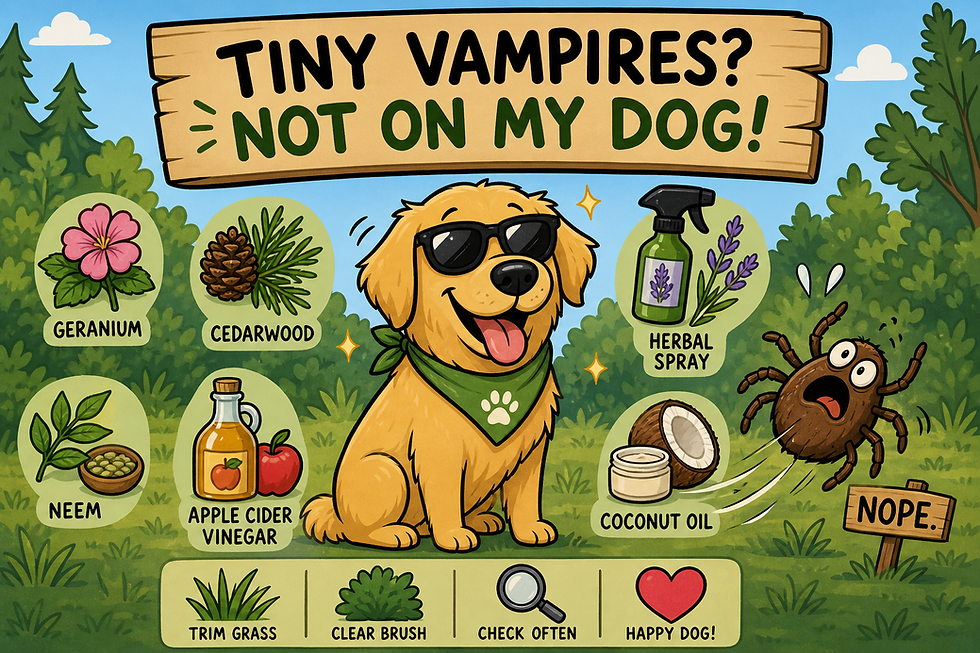
Ticks. Nature’s tiny little vampires with the confidence of a tax auditor. They wait in grass like creepy hitchhikers whose entire life goal is to attach themselves to your dog and ruin everyone’s weekend. Humanity invented space travel, and somehow we still have to pull bean-shaped parasites off golden retrievers. Outstanding species, really.
The good news is that there are natural options that may help reduce tick attraction and support prevention. The important sentence nobody in crunchy Facebook groups likes hearing: natural does not mean bulletproof. If you live in a high-tick area, especially where Lyme disease is common, you still need regular tick checks and sometimes stronger prevention measures. Your dog should not become a woodland sacrifice because Karen on the internet rubbed oregano oil on a beagle once in 2017.
The Herbal “Please Don’t Eat My Dog” Guide
1. Geranium Oil
The diva of natural tick prevention.
Specifically, rose geranium essential oil is mentioned frequently because ticks seem to dislike its scent. Why? Ticks like spiders’ taste with their feet; this tastes GROSS to them. Which, honestly, makes sense because ticks appear to thrive exclusively on misery and swamp energy.
How to use it safely:
Dilute properly. Essential oils are concentrated enough to bully your nostrils from across the room.
Add 1-2 drops to a carrier oil like coconut oil.
Rub lightly around:
collar area
shoulders
base of tail
Do not:
dump it directly on your dog
let your dog drink it
use massive amounts because “more is better.”
That philosophy also gave rise to gas-station sushi. Do not eat.
2. Cedarwood
Ticks hate cedarwood almost as much as dogs hate baths.
Cedarwood is commonly used in:
natural sprays
yard treatments
cedar bedding
flea/tick shampoos
It has a woodsy smell that says:“I hike occasionally, but emotionally I belong indoors.”
A diluted cedarwood spray can help discourage ticks before hikes or trail walks.
3. Neem Oil
Neem smells like someone boiled peanuts in an old toolbox, but ticks apparently find it offensive enough to stay away.
Benefits:
may repel ticks and fleas
supports irritated skin
often included in natural pet sprays
Also useful on lice
Downside:Your dog may smell like an herbal apocalypse survivor.
Still, effective little goblin oil.
4. Apple Cider Vinegar
The internet’s answer to literally everything short of mortgage rates.
Some dog owners add a tiny amount to food or water, believing it changes skin chemistry enough to discourage pests.
Typical amounts:
small dogs: 1/4 tsp
medium dogs: 1/2 tsp
large dogs: up to 1 tsp
You can also dilute it into a coat spray.
Will it create an invisible anti-tick force field? No. Calm down. But it may help as part of a layered approach.
5. Herbal Tick Sprays
This is where the witchcraft pantry really shines.
Common herbs/oils used in natural sprays:
geranium
cedarwood
lavender
lemongrass
peppermint
neem
Want a premade spray??? Check out TK’s TICK OFF on my online shop
Avoid spraying:
eyes
nose
mouth
sensitive skin
Also, maybe don’t make your dog smell like a candle aisle exploded.
6. Coconut Oil
Coconut oil somehow infiltrated dogs, skincare, baking, and human spirituality simultaneously.
Some owners rub a small amount into the coat because:
it conditions skin
may mildly discourage pests
helps carrier oils spread safely
Bonus:Your dog becomes lightly buttered (and slightly greasy). The forest predators appreciate the presentation.
7. Yard Control
Half the battle is turning your yard into hostile territory for ticks.
Ticks love:
tall grass
leaf piles
damp shady areas
chaos
Basically, the abandoned Victorian orphanage conditions.
Helpful things:
mow regularly
trim brush
remove leaf buildup
create gravel or mulch borders
use cedar mulch
Your dog can’t collect ticks from grass that looks emotionally defeated.
The Big Important Part Nobody Likes Reading
Natural prevention can help. It can reduce risk. It can support overall protection.
But:
It is not guaranteed.
Heavy tick regions may require veterinary preventatives and even these do not stop ticks from attaching.
puppies, seniors, and immunocompromised dogs are at higher risk
Check your dog after:
hikes
fields
forests
suspicious squirrel negotiations
Look around:
ears
armpits
groin
toes
collar line
Because ticks are little cowards who specialize in hiding where dignity goes to die.
Final Thoughts
Natural tick prevention works best as a layered strategy:
herbal sprays
yard maintenance
regular grooming
tick checks
smart trail habits
Think of it less like a magical shield and more like making your dog a deeply inconvenient buffet option.
Which, honestly, is almost all that survival comes down to.


Comments